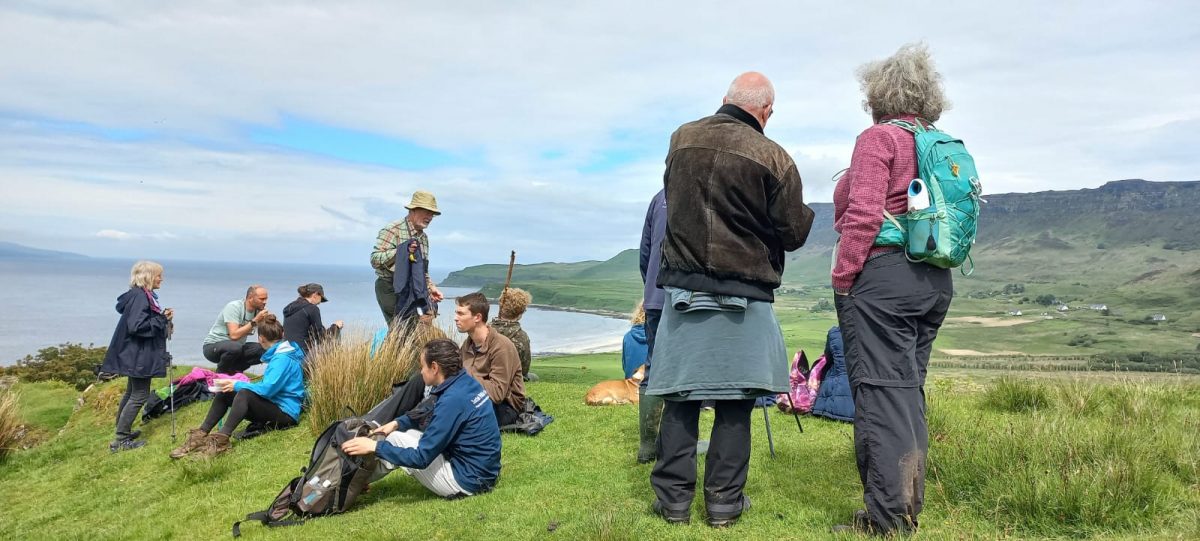
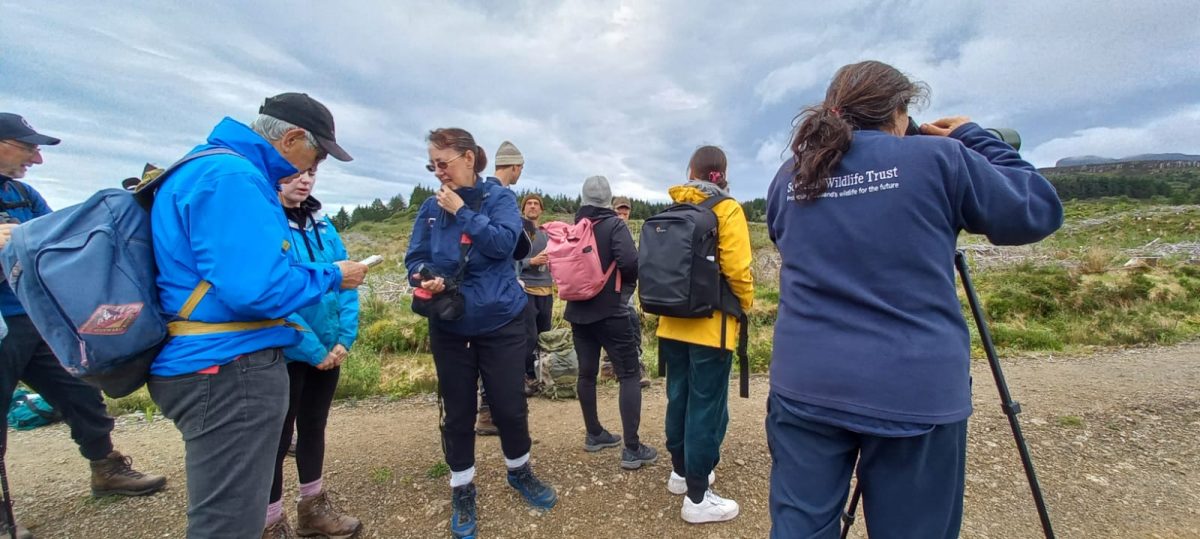
The Scottish Wildlife Trust (SWT) is a partner of Isle of Eigg Heritage Trust with responsibilities for wildlife conservation policies. The Scottish Wildlife Trust employs a seasonal ranger to carry out wildlife surveys, lead guided walks and events, provide wildlife information, carry out practical conservation tasks and help with land management issues. SWT’s 2026 walks are listed below.
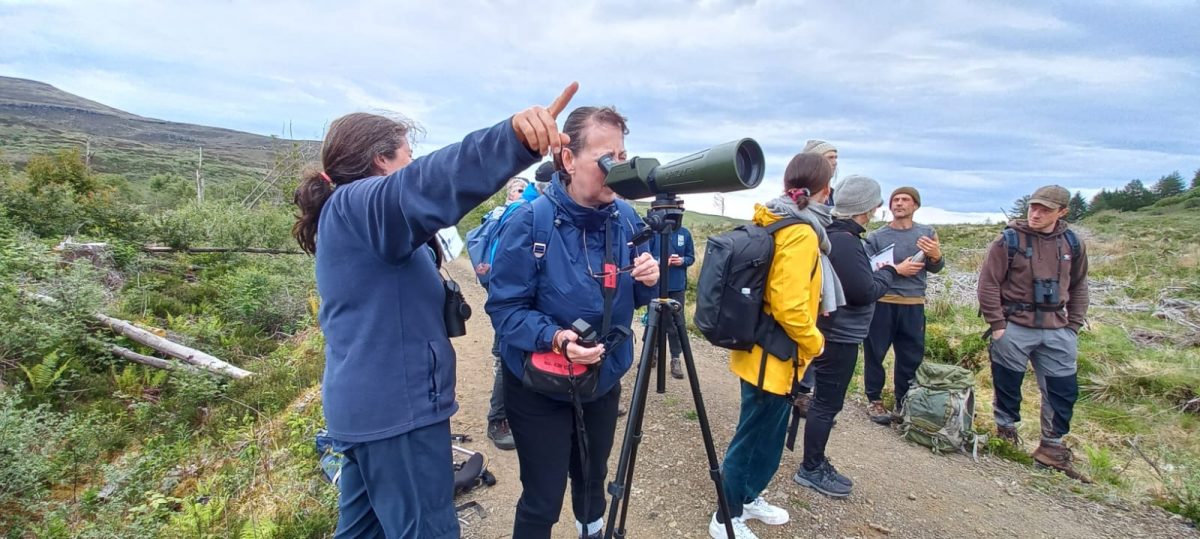
SWT wildlife walks with the seasonal wildlife ranger run throughout the summer. You don’t need to book and walks are free of charge, but donations are welcome. Any donations go directly towards projects organised by the Eigg ranger to support wildlife and biodiversity. For up to date info see notice board at An Laimhrig pier building.
You can make a donation by text at any time. Text SWTEIGG followed by your donation amount to 70085. For example to donate £5, text SWTEIGG5 to 70085, to donate £10, text SWTEIGG10 to 70085.
Seashore guided walks, June to August 2026
Every Monday, 12 – 1.30 pm, from Mon 8th June to 31st August
Meet at the stone arch area at pier. An easy walk for all the family -join us along the seashore trail to find out about our favourite wildlife in the bay – seals, shorebirds and wildflowers!
Walk on the Wild Side guided walks, May to August 2026
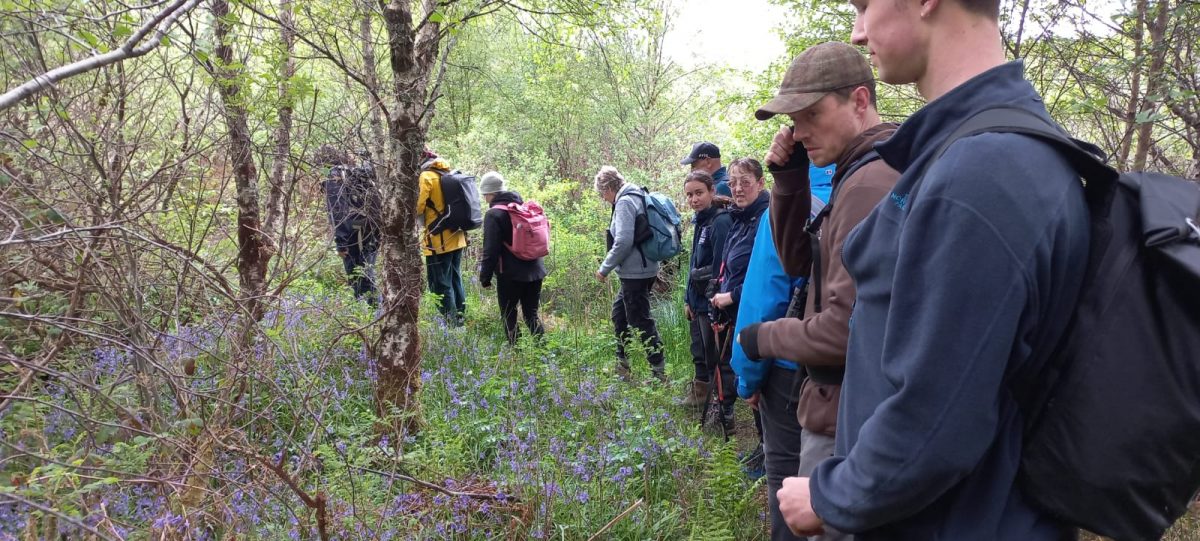
Every Wednesday starting on 13th May to 26th August (except the last Wednesday of each month, see below) Meet at 11 am at the Old Shop building in the middle of the islan. Go off the beaten track with the Ranger to explore hidden habitats and amazing wildlife. Route will be decided on the day depending on wildlife, weather etc. usually into the woods or down to Kildonan.
Coastal guided walks – 27th May, 24th June, 29th July, 26th Aug 2026
On the last Wednesday of each month we will do a walk to Singing Sands and Laig bay along a coastal route, so we will start at a different meeting place. Meet at the Cleadale crossroads at 11am. We go at a leisurely pace, looking for wildlife and take 3 – 4 hours. Bring a packed lunch, water, waterproofs etc. Paths can be muddy, wet and uneven.
All Scottish Wildlife Trust walks are free but donations very welcome, by QR code or text. No booking required – except if you are a large group please enquire beforehand. Email: nbarnes@scottishwildlifetrust.org.uk
Walks are open to people of all ages and backgrounds and will be tailored on the day depending on the interests and appeal of the group. This can include tours to see the islands spectacular array of feathery residents and visitors, which can include the powerful and majestic golden eagle, the mystical hen harrier, lapwings and curlews, Divers and maybe the odd rare vagrant! If feathers are not your cup of tea, the island is also home to a diverse range of fabulous and rare flora, as well as bonnie butterflies which can be bountiful throughout the islands wide range of habitats.
Throughout these walks you will also get an insight into the islands fascinating history as well as gracing your eyes on some truly breath taking views! You never know you may also get the chance to see some of the islands more elusive species like the playful otter or the mammoth minke whale.
If you have any questions, or you are a large group interested in a walk, please email Eigg’s SWT warden Norah Barnes
Birds
Eigg’s current bird list totals 212 species, an impressive number for an island of its size and location. Approximately 130 species are normally recorded in an average year, of which half of that number are breeding.
As with most northernly sites in Spring, particularly May and early June, are the best times to visit for birdwatching. Autumn should not be overlooked though and October can be very productive. Sea-watching is best in late August -September. However, there is always something of interest to be seen throughout the year! Resident bird species on the island include a fair-cross section of woodland and shoreline birds plus typical “West coast” species such as the golden eagle, white tailed eagle, raven, buzzard, red throated diver, stonechat etc. in spring, these are augmented by summer visitors like cuckoo, whinchat, whitethroat, willow warbler, twite and many more while autumn brings winter visitors like great northern diver and jack snipe.
Passage birds, geese, waders and various passerines, move through the island in spring and autumn and real rarities can occur. In the last ten years, more unusual species have included quail, pomarine skua, glaucous and Iceland gull, little auk, subalpine warbler, red breasted flycatcher, arctic redpoll, common rosefinch, black headed bunting, glossy ibis and woodlark
Click here for the Isle of Eigg Bird Report
Plantlife
Eigg has been rightly called the isle of flowers by naturalists. Its rich and varied plant-life includes 500 higher plant species and a bryophyte list numbering well over 300 species of which over 20 are national rarities. A good deal of the land is covered in hazel scrub woodland so that bluebells, wild garlic, wood anenome, wood sorrel and primroses abound in the spring. Later in the summer, they are replaced by honeysuckle, enchanter’s nightshade and many other species.
12 species of Orchids grow on the island, including the often abundant heath spotted, fragrant and northern marsh orchids. Scarcer species are great butterfly, small white and frog orchids.
The island cliffs are home to a good cross section of alpine and arctic species: mountain avens, both purple and yellow saxifrage, moss campion, and the rare arctic sandwort.
Ferns are abundant and include species such as rusty bark, adderstongue and the odd-looking moonwort.
Sealife
The coast around Eigg offers ideal opportunities for whale, dolphin and seal watching.
The ranger service takes part in Shorewatch surveys with Whale and Dolphin Conservation and Hebridean Whale and Dolphin Trust.
Minke whales are a regular feature in the waters around the island between July and September. These can be seen during boat trips to and from the island, particularly on MV Sheerwater sailing from Arisaig Marine. Sometimes as many as seven can be seen in the one time! The Sheerwater’s skipper excels at finding them and following them for visitors’ enjoyment.
Dolphins of several species and particularly porpoises are also seen on a regular basis. The most dramatic dolphin, the killer whale, is sometimes spotted, like the basking shark, Britain’s largest fish, or real oddities like the sunfish, as they feed in Eigg’s rich coastal waters.